
DESIGNATED-DRIVER MARKETPLACE
DriverHub
A realtime marketplace for Denmark that connects car owners with verified drivers who drive the owner's own vehicle — supported by secure payments, live trip coordination, and a complete operations command center.
About the Project
DriverHub
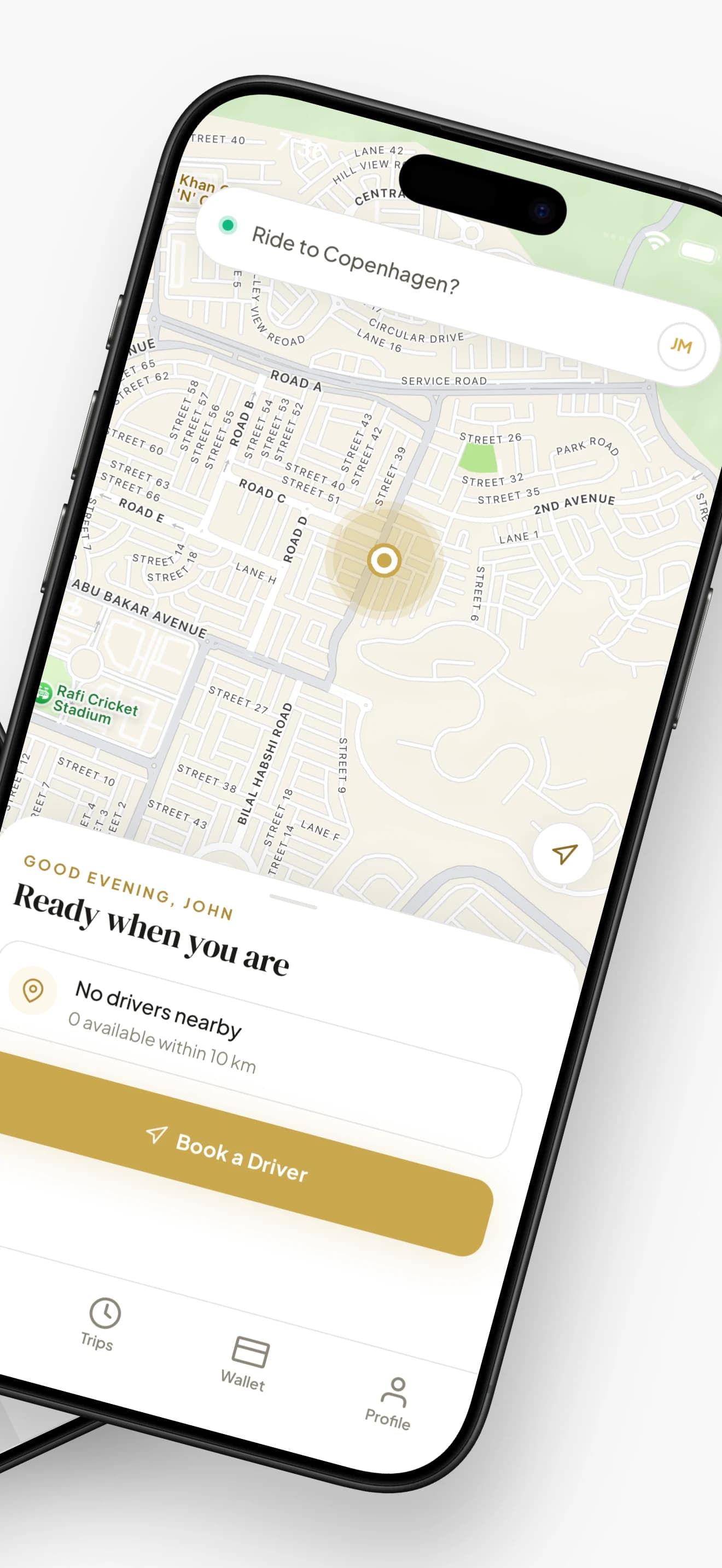
DriverHub was shaped around a model that looks familiar at first glance but works very differently from ride hailing: the driver does not bring a vehicle. The product had to make that distinction clear while coordinating two roles, driver verification, route-based fares, payment authorization, live location, trip state, support, and marketplace operations. The result is one connected system spanning a bilingual mobile app, a Supabase backend, and a privileged web dashboard for the team operating the service.
One marketplace. Three operational views.
A coordinated experience for car owners, verified drivers, and the team responsible for keeping the marketplace healthy.
Project Deep Dive
Project Deep Dive
Unpacking the architecture, innovations, and real-world results
One marketplace, three connected surfaces
The mobile experience, Supabase backend, and Next.js operations dashboard work against one shared source of truth. Auth, Postgres, Row-Level Security, Storage, Realtime, and Edge Functions coordinate the marketplace, while server-only admin actions handle privileged operations. Stripe, Google Maps, OneSignal, and Veriff are integrated at the boundaries where payments, routing, notifications, and identity verification require specialist services.
A booking flow designed around the owner’s car
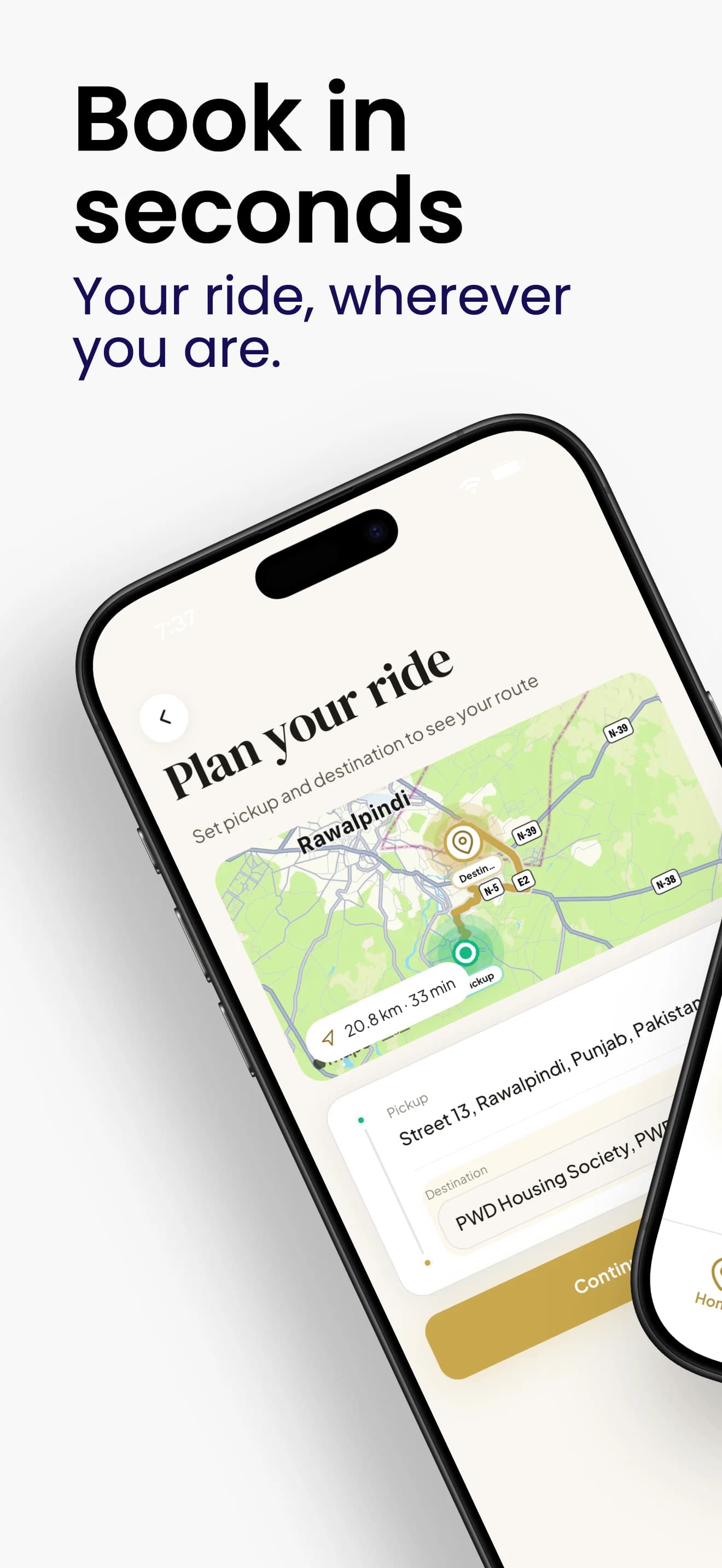
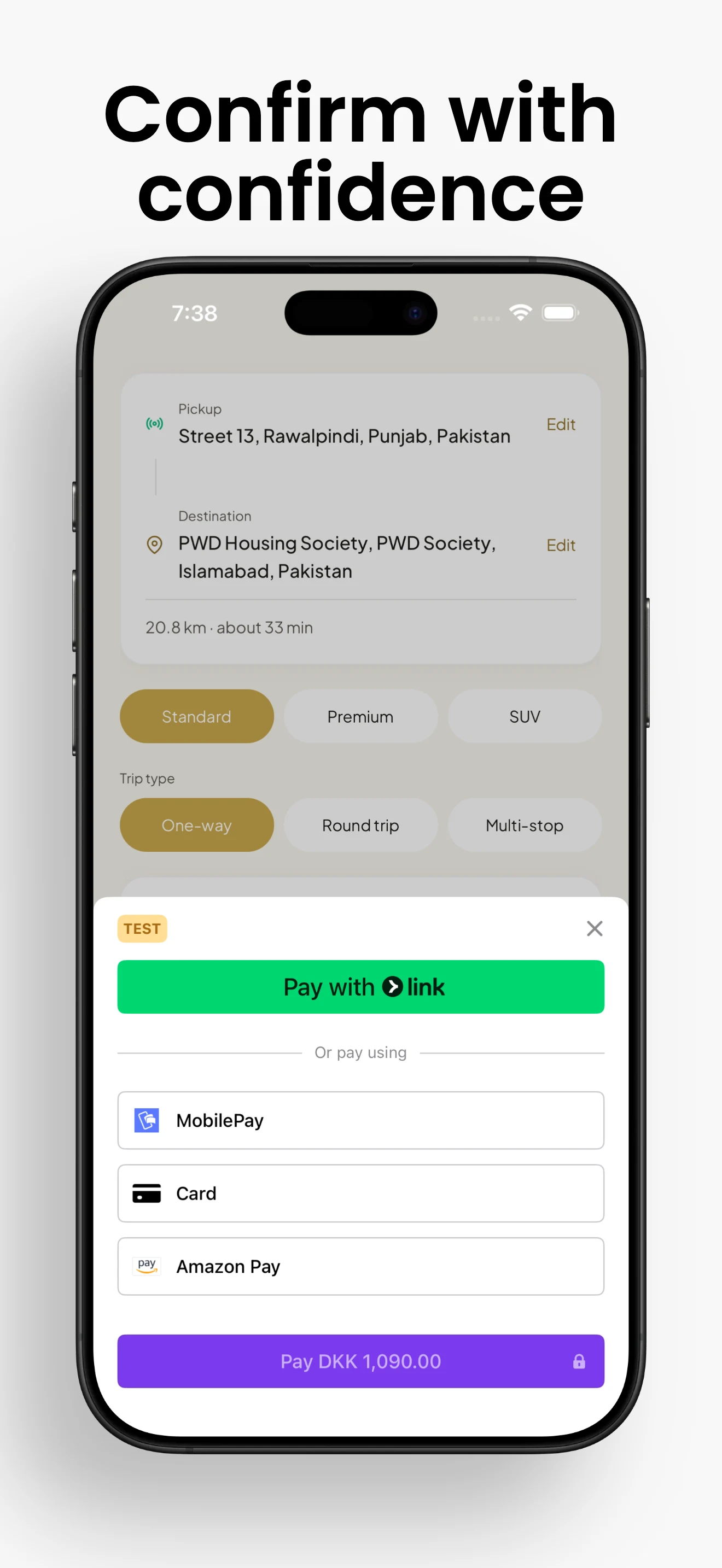
Car owners move from pickup and destination search to route review, vehicle class, trip type, fare, and payment without being pushed through a taxi-style mental model. One-way, wait-and-return, and multi-stop trips each use their own fare logic. The interface keeps the route, estimated time, price, and next action visible so a complex booking still feels direct.
A visible lifecycle from request to receipt
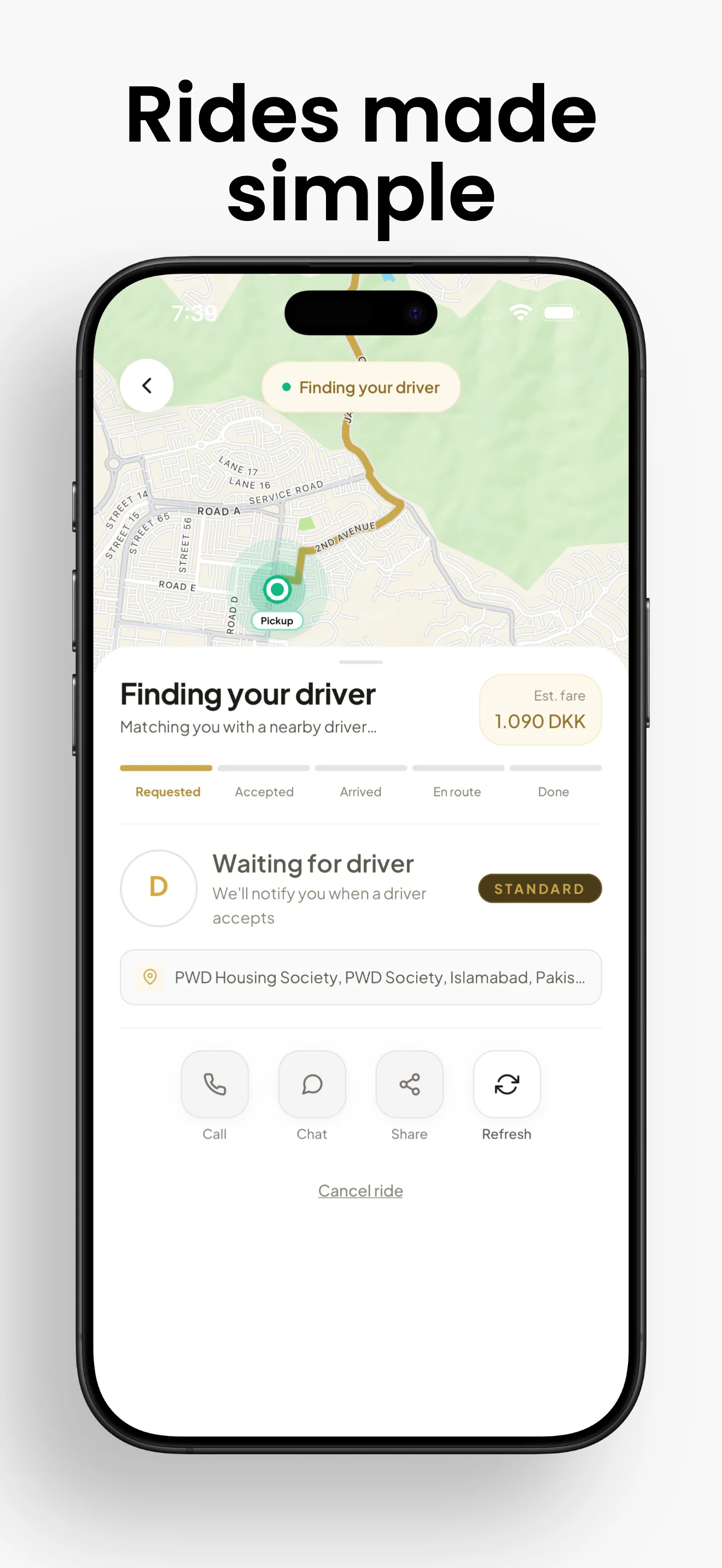
Every trip moves through an explicit state machine: payment pending, requested, accepted, driver arrived, in progress, completed, or cancelled. Realtime subscriptions keep both people aligned, while live driver location, chat, calling, sharing, notifications, and receipt screens reduce uncertainty at the moments when users need reassurance most.
Trust built into driver onboarding
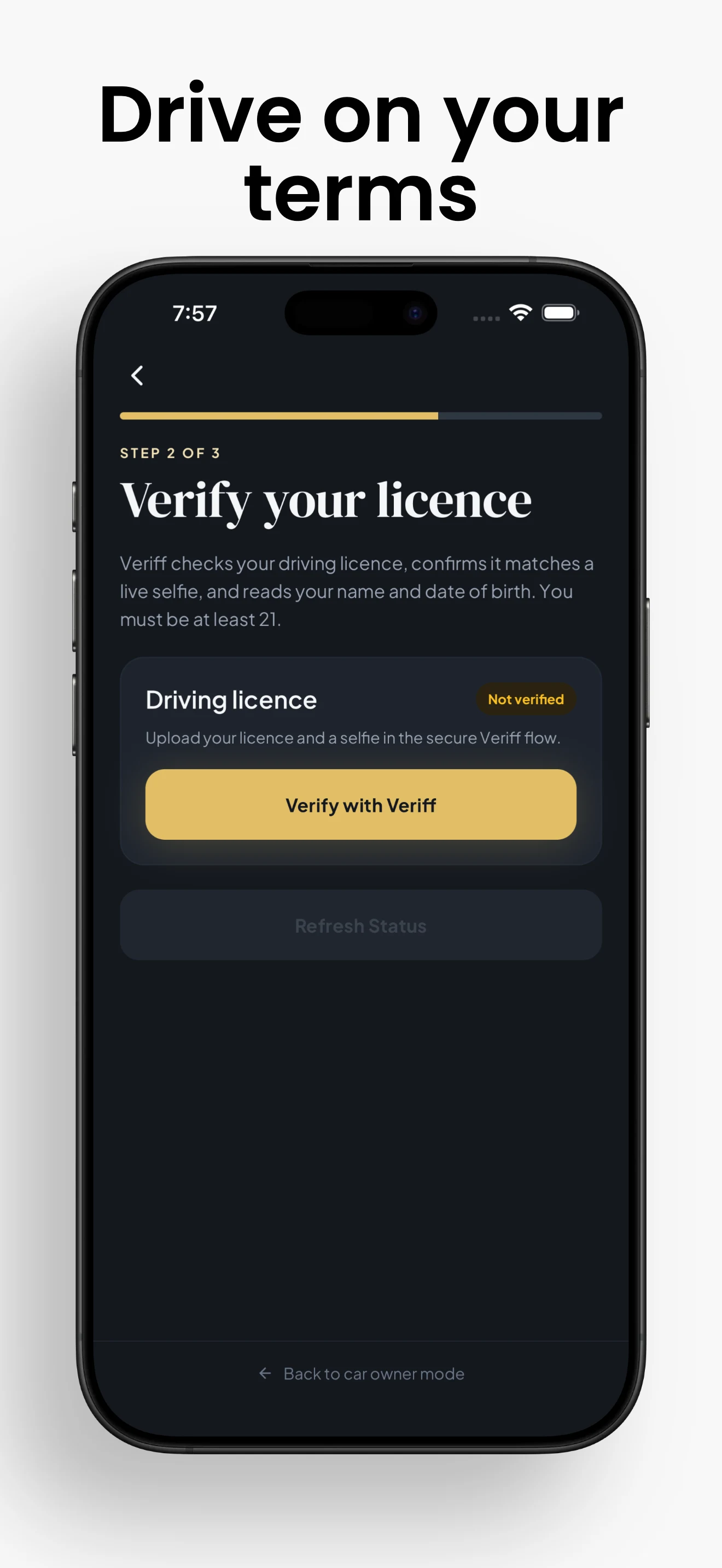
The current Danish onboarding flow uses Veriff to verify the driving licence, match a live selfie, extract identity details, and enforce a 21+ eligibility rule. A successful verification can approve the driver automatically, while approval guards prevent unverified or changed credentials from silently retaining access to online driver operations.
A focused operating mode for drivers
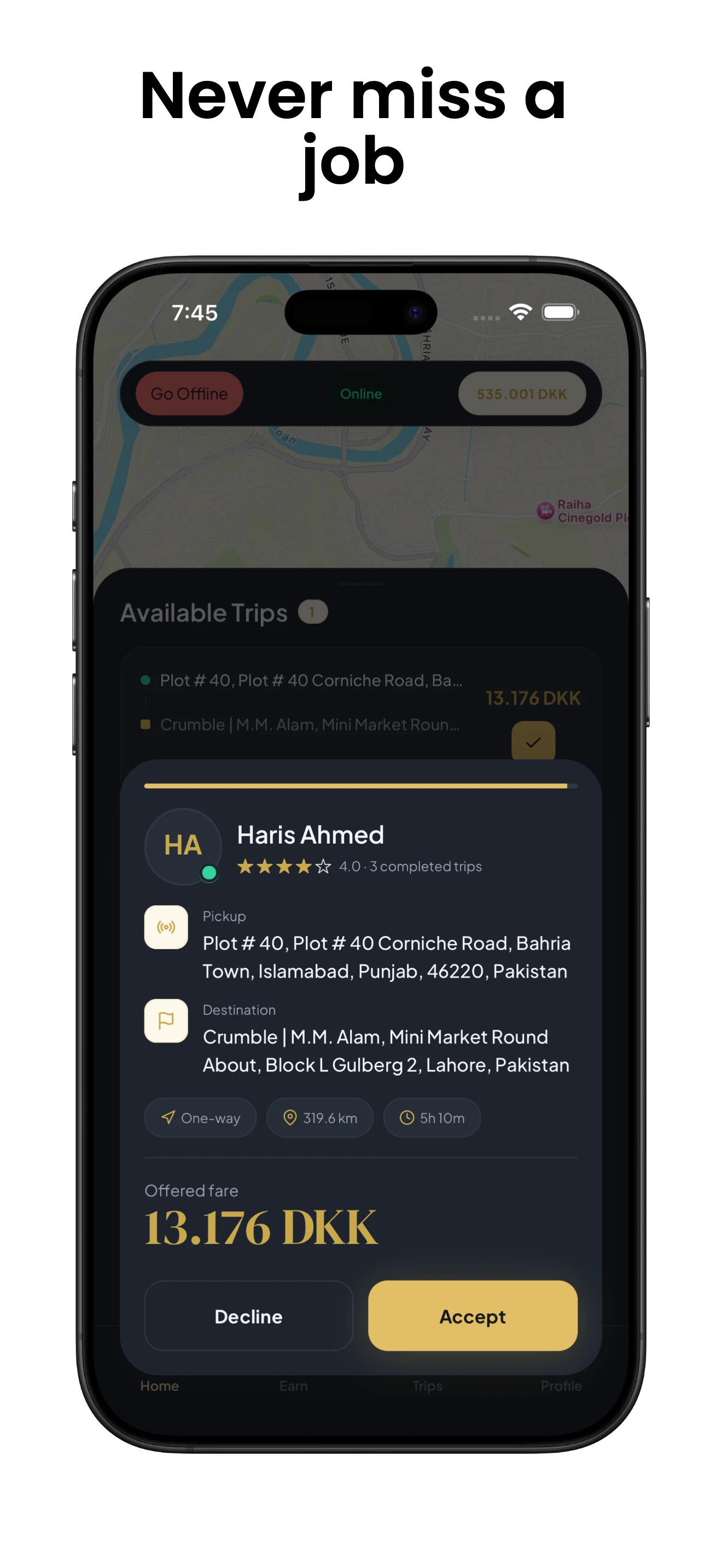
Driver mode switches to a dark, high-contrast workspace built for availability and quick decisions. Approved drivers go online, stream a location heartbeat, receive nearby jobs, review pickup, destination, distance, duration, passenger rating, and offered fare, then accept only one active trip at a time.
Earnings for drivers, oversight for operators
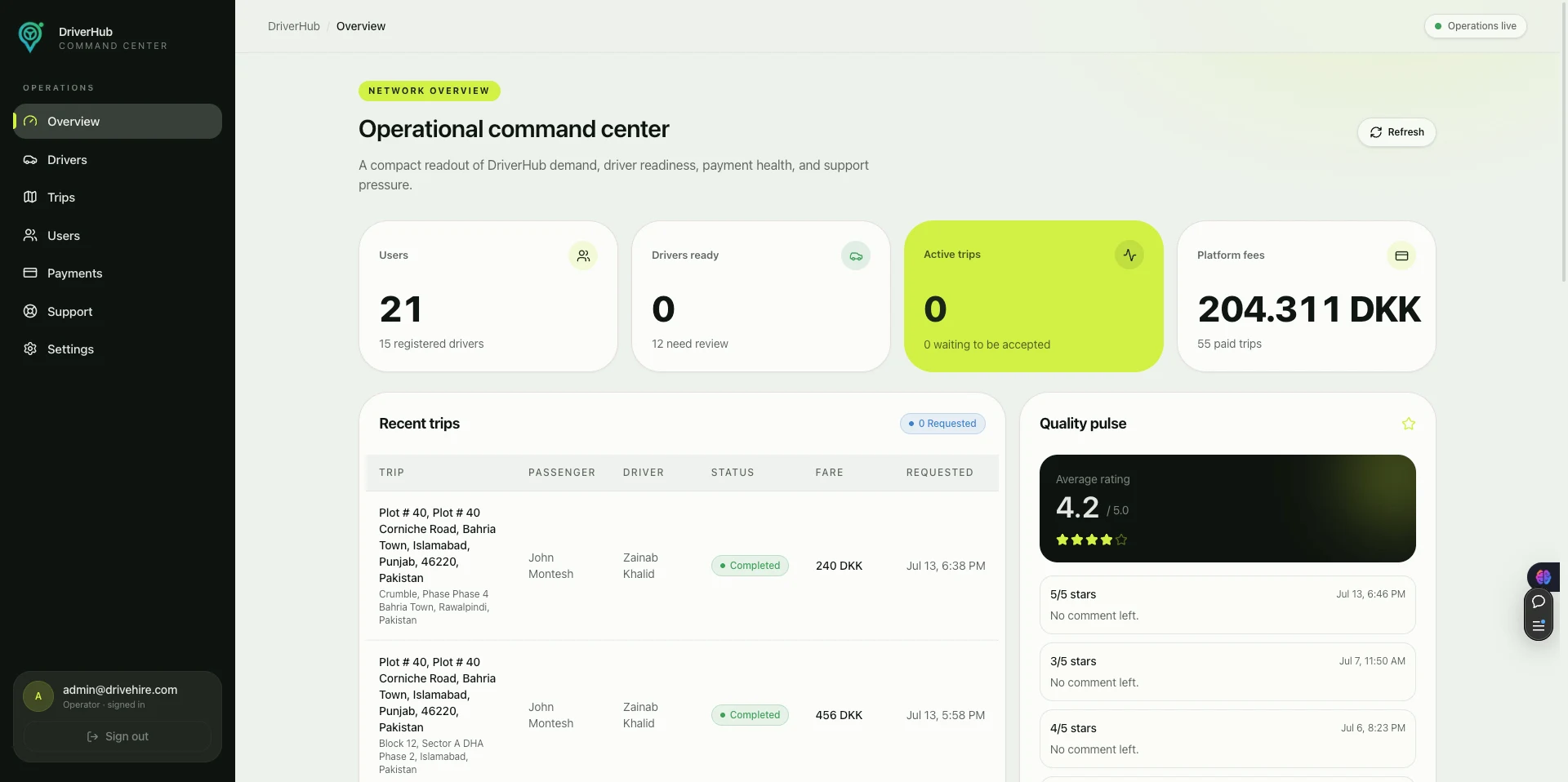
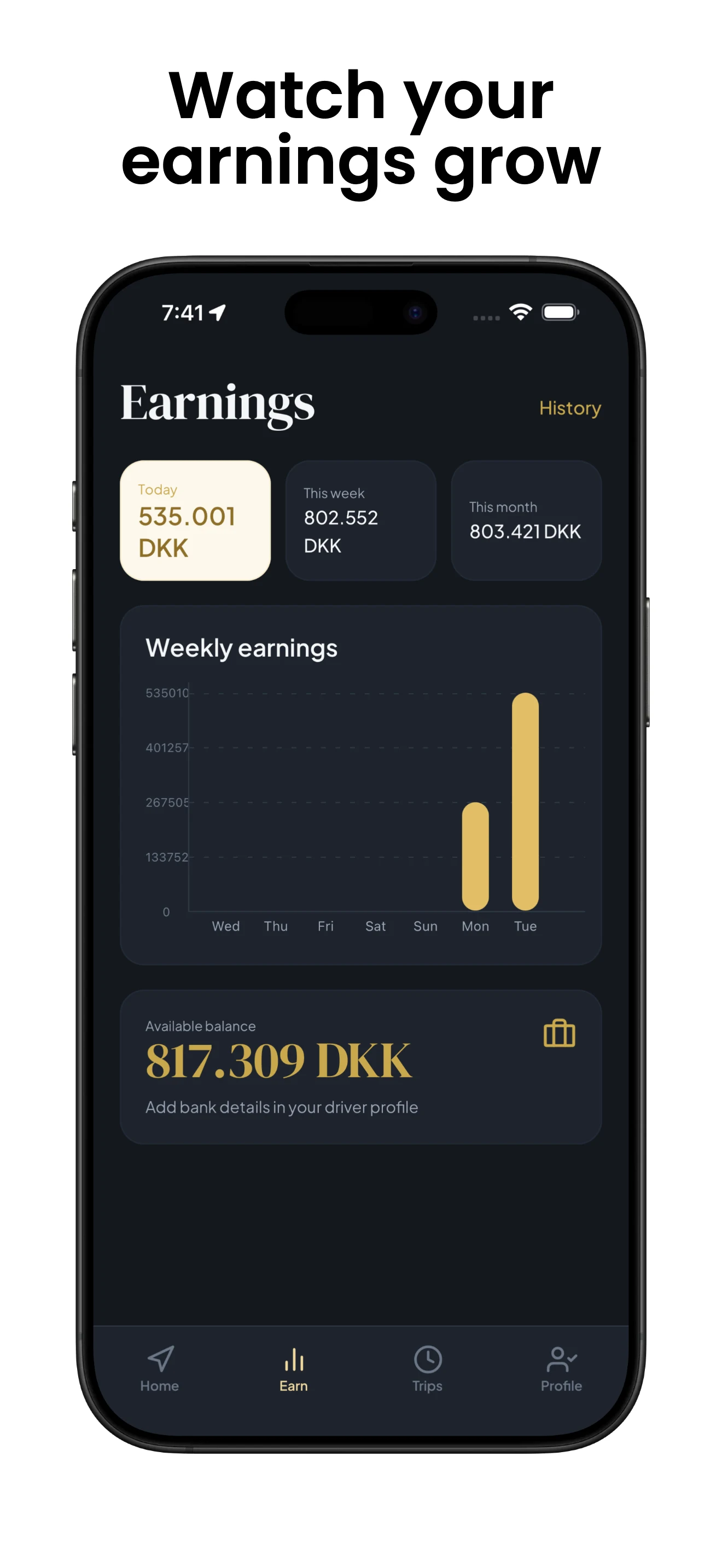
Drivers can understand daily, weekly, and monthly earnings alongside available balance and trip history. The operations team sees the other side of that system: users, driver readiness, active trips, payment health, platform fees, ratings, support context, and runtime marketplace settings from a protected command center.
Key Outcomes
Key Outcomes
Measurable results that demonstrate the impact of thoughtful design
3 surfaces
one connected mobile marketplace, backend platform, and operations dashboard
2 roles
purpose-built car-owner and driver experiences within the same mobile product
3 trip types
one-way, wait-and-return, and multi-stop journeys with distinct fare rules
Realtime
trip status, driver location, messaging, and notifications kept in sync
Next Project